
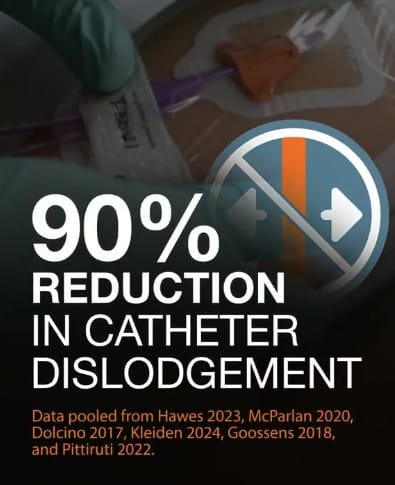
SecurAcath® delivers dramatic reduction in catheter dislodgement
-
6 comparative studies
-
5 countries
-
12,815 patients
-
Neonates to geriatrics
-
Over 1.5 million catheter days
Data pooled from Hawes 2023, McParlan 2020, Dolcino 2017, Kleidon 2024, Goossens 2018, and Pittiruti 2022
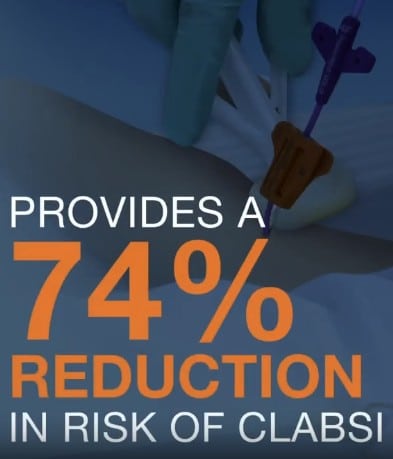
SecurAcath® provides a significant reduction in risk of CLABSI
-
UAMS analyzed 7,779 patients over four years of Central Line Associated Bloodstream Infection (CLABSI) data
-
Compared outcomes of PICCs secured with SecurAcath vs. an adhesive device
-
Found a substantial difference in relative risk of CLABSI among securement devices
-
Consistent reduction observed over 4 years
Rowe, et al, American Journal of Infection Control (2020) Vol. 48, Dec
How Does SecurAcath Work?
-
Just One, For the Life of the Line™
-
Small, flexible feet placed just beneath skin at insertion site
-
No adhesives needed for securement
-
No sutures or additional punctures, eliminating needle sticks
-
Improves efficiency
-
Lowers the total cost of patient care
Tricia, Amanda, and Josh discuss SECURED Results
SecurAcath® is Superior to Standard of Care in Newly Published Randomized Controlled Clinical Study
Securement to prevent non-cuffed central venous catheter dislodgement in pediatrics The SECURED superiority randomized clinical trial
“Catheter dislodgement is a major clinical problem for our pediatric patients, with potentially life-threatening consequences. The results of this study clearly show SecurAcath reduces dislodgement and saves money, therefore, SecurAcath should be used preferentially over adhesive device securement,” said Tricia Kleidon, RN, MNursePrac, lead author of the study publication.
SecurAcath® Awarded Innovative Technology Contract from Vizient
Vizient is the largest member-driven health care performance improvement company in the U.S. The contract was based on the recommendation of SecurAcath by hospital experts who serve on one of Vizient’s member-led councils that identify technologies that have the potential to enhance clinical care, patient safety, health care worker safety or improve business operations of health care organizations. Vizient currently serves more than 50% of the nation’s acute care providers and 95% of the nation’s academic medical centers.
SecurAcath is Recommended by the National Institute for Care Excellence